Shatkriyas and Ayurvedic Panchakarma are two foundational detoxification and cleansing systems from Yoga and Ayurveda. While both aim to purify the body and mind, they originate from different traditional streams: Shatkriyas belong to Hatha Yoga practices, whereas Panchakarma is a core therapy in Ayurveda. The most common cleansing techniques are
What is included in the program?
Detox Therapy: In Yoga, detoxification refers to cleansing the physical and subtle body to prepare for higher practices like Pranayama and Meditation. It removes impurities (mala), balances the nervous system, and enhances pranic flow for overall well-being.

Jala Neti (Nasal Cleansing with Water)
- Method: Warm saline water is poured through one nostril using a Neti pot, exiting from the other nostril.
- Purpose: Clears nasal passages, improves breathing, reduces sinusitis and allergies.
- Frequency: Daily or weekly; commonly taught in Yoga classes.
- Precautions: Use lukewarm sterile water; avoid during severe cold or nasal injury.
Trataka (Gazing for Concentration)
- Method: Fix gaze on a candle flame or point without blinking; then close eyes and visualize afterimage.
- Purpose: Improves eye health, concentration, and relieves mental tension.
- Frequency: Few minutes daily, especially for students or meditators.
- Precautions: Avoid if severe eye problems or migraine.
Vamana Dhauti (Kunjal Kriya – Induced Vomiting)
- Method: Drink lukewarm saline water (6–8 glasses) and voluntarily vomit to cleanse the stomach.
- Purpose: Removes excess mucus, acidity, and toxins; relieves congestion.
- Frequency: Occasionally (monthly or seasonal) under expert guidance.
- Precautions: Avoid in hypertension, heart disease, ulcers.
Kapalabhati (Frontal Brain Cleansing)
- Method: Rapid, forceful exhalations through the nose, with passive inhalation.
- Purpose: Clears lungs and sinuses, improves oxygenation, stimulates brain activity.
- Frequency: Daily practice (50–200 strokes), often as part of Pranayama.
- Precautions: Avoid in high BP, pregnancy, hernia, heart disease.
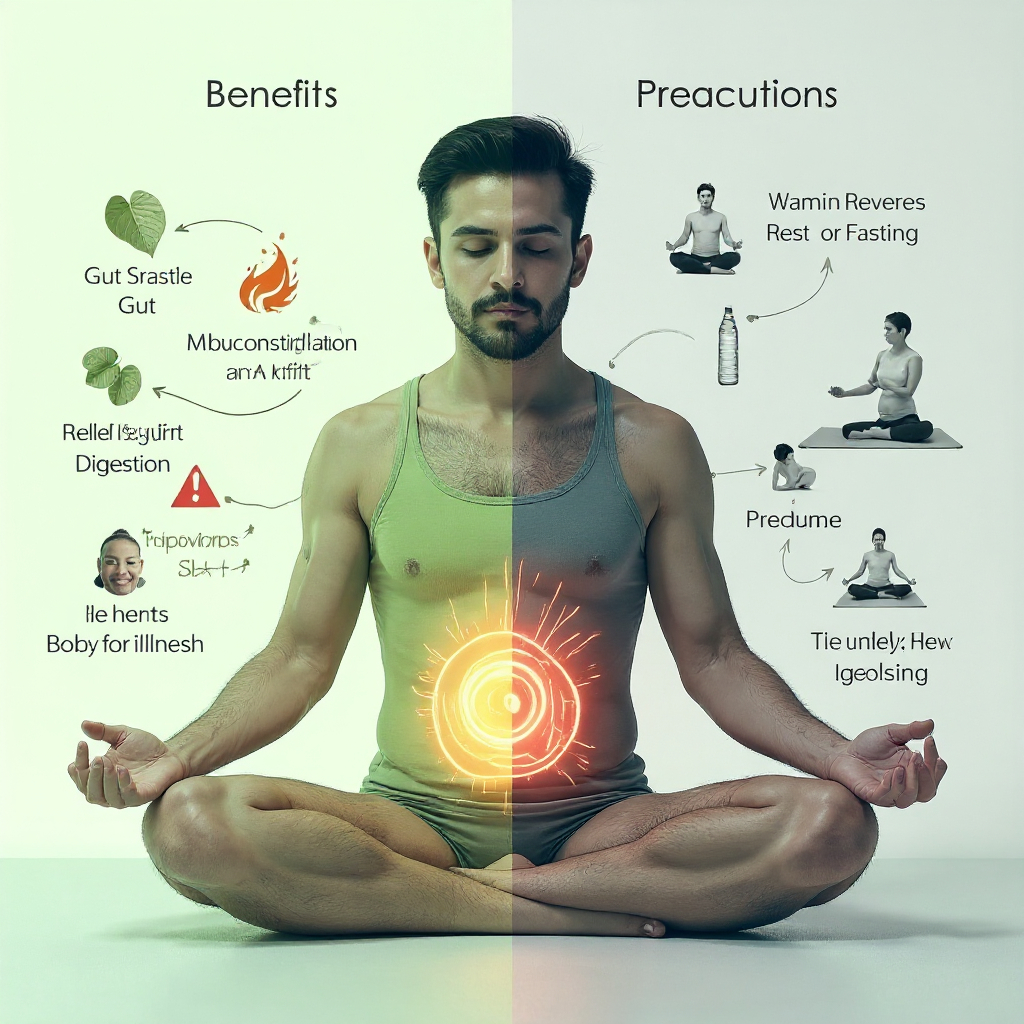
Benefits/Purpose
- Mild detox of digestive tract.
- Improves digestion and relieves constipation.
- Helpful for gastric acidity, sluggish bowel, skin problems.
- Prepares body for fasting or deeper yogic practices.
Precautions
- Not suitable for pregnancy, severe hypertension, ulcers, acute illness, heart disease.
- Must be learned under experienced yoga therapist guidance.
- Always ensure rehydration and rest after practice.
FAQs on Detoxification According to Yoga
Detoxification in Yoga refers to cleansing the body and mind through Shatkriyas (six purification techniques), supported by asanas, pranayama, and a sattvic diet to remove toxins and prepare for higher yogic practices.
The six main Shatkriyas are:
- Neti (nasal cleansing)
- Dhauti (digestive tract cleansing)
- Nauli (abdominal churning)
- Basti (yogic enema)
- Kapalabhati (frontal brain cleansing)
- Trataka (gazing)
- Neti and Kapalabhati: Can be done daily.
- Trataka: Few times a week.
- Nauli, Dhauti, Basti: Occasionally, under expert supervision (weekly/monthly).
- Cleanses respiratory and digestive tracts.
- Improves digestion, breathing, and immunity.
- Enhances pranic flow and mental clarity.
- Prepares body for pranayama and meditation.
- Should be learned from a qualified yoga teacher.
- Avoid during pregnancy, severe illness, ulcers, or hypertension.
- Always perform on empty stomach and follow with light sattvic food.
Yes, yogic kriyas can complement Ayurvedic Panchakarma to enhance physical and mental purification, often used together in yoga therapy and wellness programs.
100/-